Tchok Mujj – Kashmiri Khatti Mooli Recipe
Kashmiri Khatti Mooli recipe is more than just a culinary delight; it’s a celebration of Kashmir’s rich history, culture, and resilience. With its unique blend of flavors and the use of locally sourced ingredients, this tangy radish dish embodies the spirit of Kashmiri cuisine. As you savor each bite, you not only experience the vibrancy of the region’s culinary traditions but also connect with the warmth and hospitality of Kashmiri households. Whether served on festive occasions or enjoyed as a comforting side dish, Kashmiri Khatti Mooli stands as a testament to the culinary legacy that continues to thrive in the heart of India’s northern paradise.
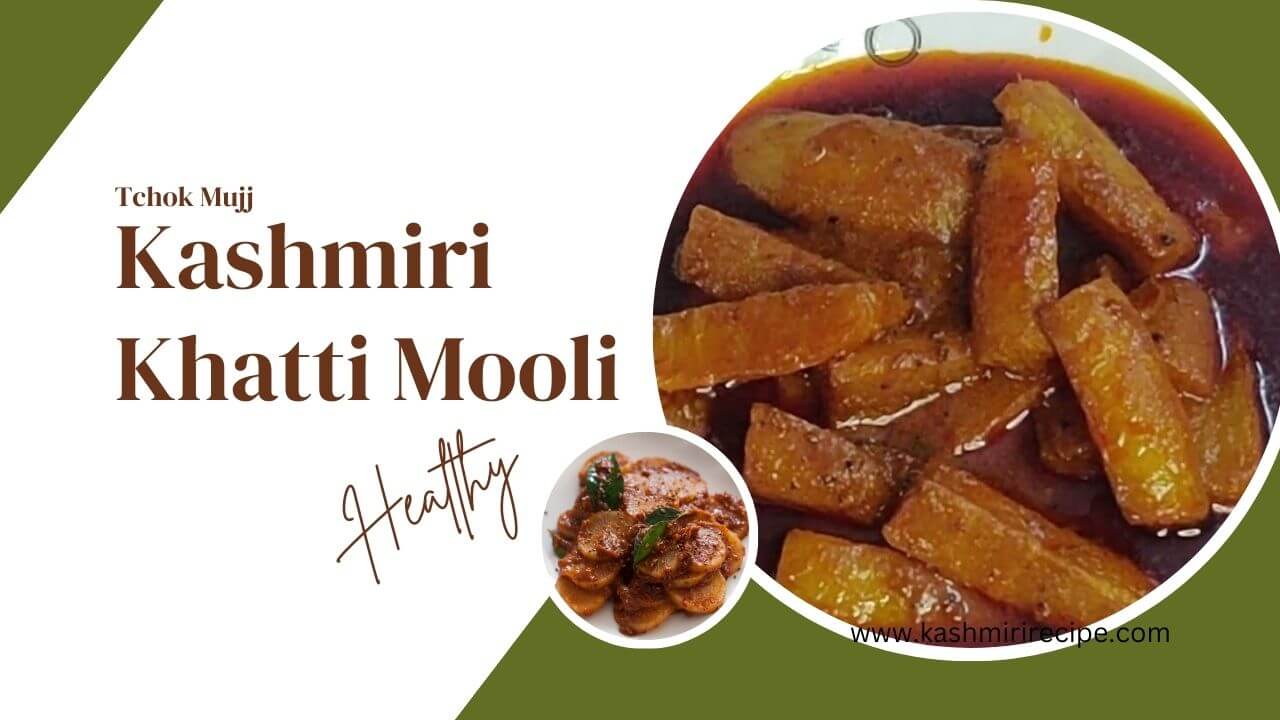
Tchok Mujj - Kashmiri Khatti Mooli Recipe
Course: Lunch, DinnerCuisine: KashmiriDifficulty: Easy4
servings30
minutes40
minutes1
hour10
minutesExperience the delightful flavors of this Tangy Kashmiri khatti mooli recipe, crafted with Tamarind pulp, Lemon juice, or Amchur. The radish takes on a delicious taste, infusing the dish with a wonderful flavor. Whether served dry or with a touch of gravy, this dish is sure to please. Radishes, known for their natural cooling properties, not only aid in digestion but also contribute to toxin elimination.
Ingredients
Tamarind pulp (tamber)/ Lemon juice / Amchur
½ kg Radish
1 teaspoon of ginger powder.
½ teaspoon cumin seed
1 teaspoon red chili powder
1 pinch of turmeric
1 pinch of asafoetida
Cooking vegetable oil or Mustard oil
Salt to taste
Water
How to make Tchok Mujj - Kashmiri Khatti Mooli Recipe
- Wash radish with water
- Peel, and cut the radish vertically into 2½" long pieces
- In a frying pan, heat some oil
- Deep fry 5-6 slices of radish at one time
- In a separate frying pan, heat 3-4 tablespoon oil
- Add asafoetida and sauté over low heat
- Add the turmeric, cumin seeds, chili powder, ginger powder, and salt. Mix well
- Add 6 teaspoons of water and mix
- Add the fried radish to the spicy sauce
- Pour in ½ cup of water and cover it. Cook for 10 minutes, or until crisp and tender.
- Add lemon juice or tamarind pulp to the radish.
- Boil for 2 minutes
- The spicy radish is ready
- Take the pan off the burner
- Serve with white cooked rice.


People also ask
-
Can I use any radish for Kashmiri Khatti Mooli?
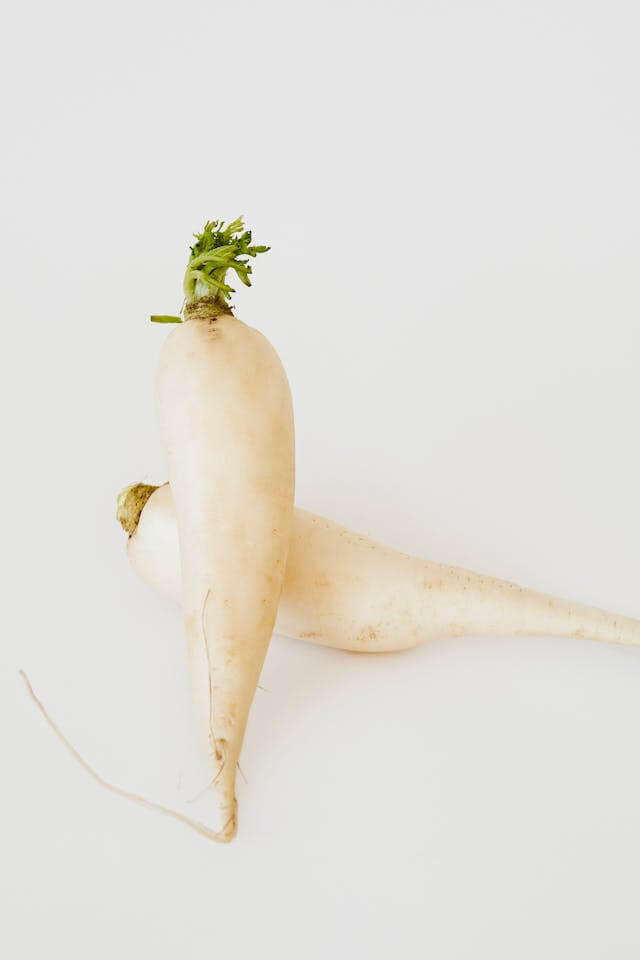
While traditional Kashmiri recipes often use white radishes (Daikon), you can adapt the dish to the radishes available in your region. Choose fresh, crisp radishes for the best results.
-
Is Kashmiri Khatti Mooli a spicy dish?
The spice level in Kashmiri Khatti Mooli can be adjusted according to personal preference. While it has a blend of spices, including red chili powder, the dish is not excessively spicy. The balance of flavors provides a delightful taste with a hint of warmth.
-
When is Kashmiri Khatti Mooli typically prepared?
Khatti Mooli is often prepared during the winter season when radishes are abundant and at their best. The cool climate of Kashmir provides an ideal environment for cultivating radishes.
-
Can Kashmiri Khatti Mooli be stored for a long time?
Yes, Kashmiri Khatti Mooli can be stored for an extended period due to the preservative nature of Tamarind. It is often made in larger quantities and enjoyed over several days.
-
What is the cultural significance of Kashmiri Khatti Mooli Recipe?
Khatti Mooli holds cultural significance in Kashmiri households and is often prepared during family gatherings, celebrations, and festivals. Its presence symbolizes hospitality and tradition.
-
How is Kashmiri Khatti Mooli served?
Khatti Mooli can be served as a standalone side dish, accompanying main courses such as rice or roti. It also makes an excellent condiment, enhancing the flavors of other dishes.
-
Can the recipe be customized to personal taste preferences?
Yes, the recipe for Kashmiri Khatti Mooli can be adjusted based on personal preferences. The levels of salt, Tamarind, Lemon, Amchur, and spice can be modified to suit individual tastes.